
How mentorship and simplifying improvement shaped Deepak’s journey
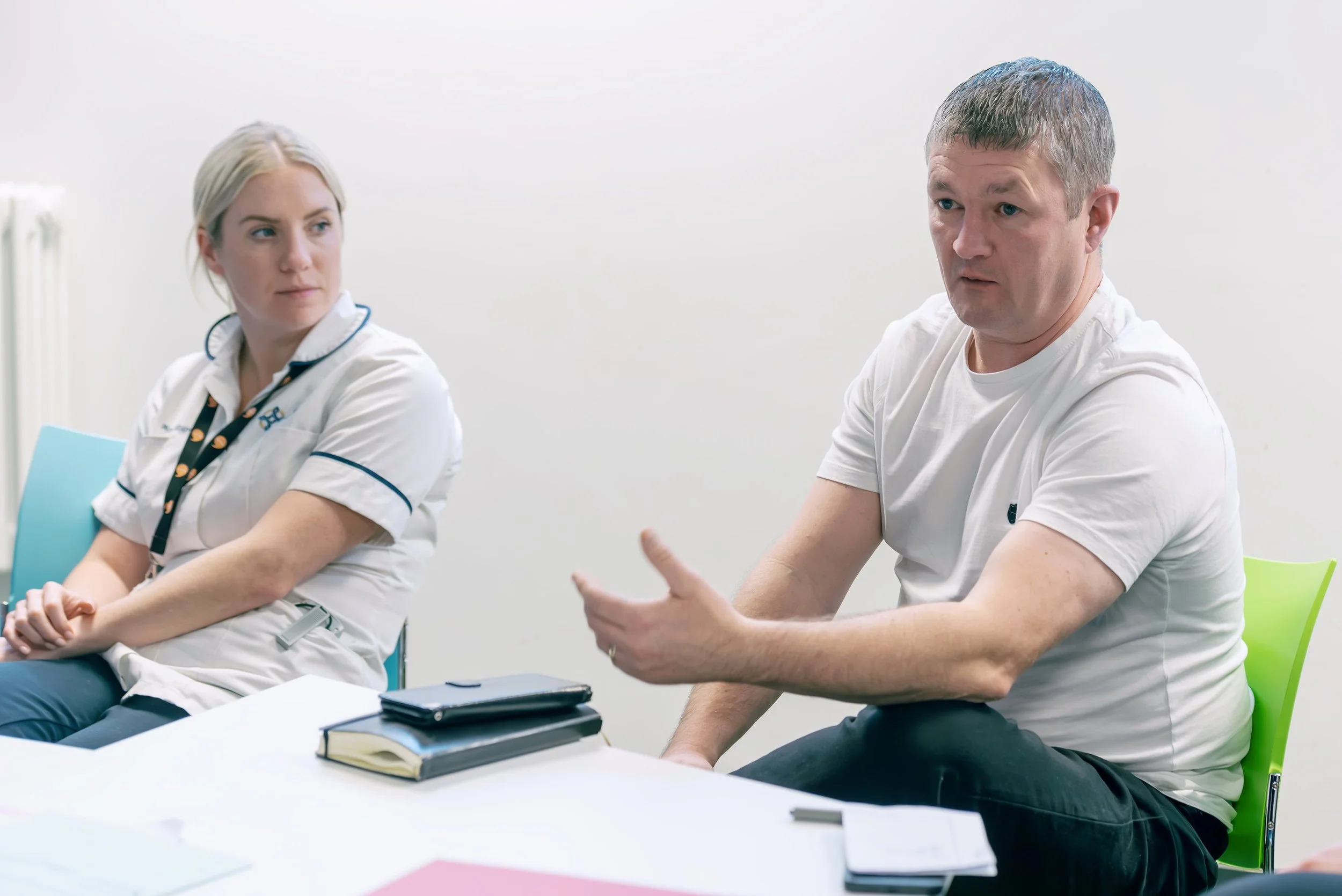
For Deepak Shaji, the Improvement Practitioner course didn’t just build on his existing experience, it transformed how he approaches improvement.
With a background in quality improvement and a Green Belt certification, Deepak was already familiar with delivering projects. But through the Improvement Practitioner course, supported by Lee McQuaide, Service Improvement Manager within Shaping Change, he developed a new way of thinking, one grounded in simplicity, clarity and impact. ‘The biggest difference is that I used to make things very complex. After the course, I started thinking in a much simpler way.’
A key part of Deepak’s experience was the mentorship he received from Lee. Throughout the course, and even as Deepak moved between departments, Lee provided consistent guidance, support and practical feedback. ‘I spoke to Lee regularly while I was doing the project, and he helped me a lot.’ This ongoing support made a significant difference, helping Deepak stay focused and continue progressing his work during periods of change. Through regular conversations, Lee encouraged Deepak to simplify his approach by moving away from overly complex processes towards something that could be understood by a wider audience.
‘The way I do things now, both clinical and non-clinical colleagues can understand it,’ Deepak reflects. Deepak applied what he learned through the course to a project focused on improving patient pathways. Building on work from his previous role and his current position in ophthalmology, he explored how genomics could be better integrated into glaucoma care.
His aim is to introduce earlier risk stratification, helping services intervene sooner, and provide more targeted care. ‘If we could implement this, we would be able to give more service to patients and make things much easier,’ he says. While the project is still in development due to funding considerations, it demonstrates how improvement methods can be applied to real-world challenges to shape future services.
One of the most valuable aspects of the course for Deepak was learning how to clearly communicate complex ideas. Using tools introduced during the programme, such as fishbone diagrams, structured analysis, and clear visual layouts, he was able to present his work in a way that was accessible to a broad audience. ‘The fishbone diagram makes things clearer, you can understand the problem better and bring more outcomes,’ he explains.
These skills were put into practice when his work was accepted for presentation at a genomics conference in Cardiff, where he showcased a proposed pathway linking glaucoma services and genomics. The impact of Deepak’s work is already being recognised. Following his conference presentation, a consultant in genomics and ophthalmology reached out to offer support, opening new opportunities to develop the project further.
Alongside this, Deepak continues to apply improvement thinking beyond his role. Tools like breaking down problems and identifying root causes have become part of his everyday approach, not just in work, but in his personal life too.
‘It’s not only useful in your workspace, but it can also be used in your personal life as well,’ he says. Deepak is encouraging colleagues to take part in the Improvement Practitioner course, recognising the benefits it can bring both professionally and personally. For him, the combination of practical tools, supportive learning and strong mentorship has been key.
‘Lee has been a great mentor,’ he reflects. ‘Even after the course, I’m still in touch with him. He really helped me a lot.’
If you’d like to follow in Deepak’s footsteps, apply for the Improvement Practitioner Course today.
The upcoming cohort course dates are 2nd September / 16th, 18th September / 18th, 19th November (please note you need to be available for all three sets of dates).